The One Insurance Form That Can Quietly Cut Your Crash Recovery in Half
Key Takeaways: A UIM stacking waiver is a Pennsylvania statutory form that trades away "stacked" underinsured and uninsured motorist limits for a lower premium. Under 75 Pa.C.S. § 1738, stacked coverage is the default when you carry UM/UIM coverage on multiple vehicles, disappearing only if the named insured signs a valid, dated rejection form. The financial difference is significant: three vehicles with $100,000 in UIM coverage each may provide up to $300,000 stacked versus $100,000 once waived. The waiver affects household members, including spouses and resident children. A new waiver may be required when additional coverage is purchased, though Franks v. State Farm held that removing a vehicle is not a "purchase." Whether you should sign depends on your household’s drivers, health and disability coverage, tort election, and risk tolerance if an at-fault driver carries minimum limits. Defective or undated forms may be void, making it critical to review your declarations page and every signed § 1738 form.
A UIM stacking waiver is a statutory form that lets Pennsylvania policyholders give up "stacked" underinsured and uninsured motorist limits for a lower premium. Under Pennsylvania’s Motor Vehicle Financial Responsibility Law, stacked coverage is the default when UM/UIM coverage is carried on multiple vehicles, disappearing only if the named insured affirmatively signs it away.
Before you sign anything an agent slides across the desk, talk with a firm that reads these policies daily. The Injury Pros offers free consultations to injured Pennsylvania drivers, passengers, and pedestrians. Call 215-642-2335 or contact us now to have your coverage questions answered.

How Stacking Works Under Pennsylvania Insurance Law
Stacking multiplies your available UM/UIM benefits by the number of vehicles covered. Under 75 Pa.C.S. § 1738(a), when multiple vehicles are insured under policies providing UM/UIM coverage, available limits are generally the sum of limits for each motor vehicle as to which the injured person is insured. Pennsylvania recognizes both intra-policy stacking, which multiplies limits across vehicles on a single policy, and inter-policy stacking, which combines coverage across separate policies, subject to statutory exceptions and policy language.
The arithmetic makes this decision consequential. If you carry $100,000 in UIM coverage on three vehicles, stacked coverage may make up to $300,000 available after a serious crash, while a signed waiver limits you to $100,000. That difference can decide whether a spinal cord injury, traumatic brain injury, or wrongful death claim is fully compensated or falls short. Actual recovery depends on proving damages and applicable offsets.
Intra-Policy Versus Inter-Policy Stacking
Not all stacking works the same way. Intra-policy stacking applies within one policy covering multiple vehicles, while inter-policy stacking combines benefits under multiple policies, which insurers resist through household vehicle and regular use exclusions. Legal scholarship analyzing underinsured motorist coverage in Pennsylvania traces how the § 1738 framework has reshaped this area.
Why Household Members Matter
The waiver reaches beyond the person signing. The statutory form states the signer rejects stacked limits for himself or herself and household members, meaning a spouse, teenage driver, or adult child at home may be affected by a decision they never discussed. Families often learn this only after a collision, when the adjuster points to a form signed years earlier.
What the UIM Stacking Waiver Pennsylvania Requires Actually Looks Like
The waiver is not a casual initial. Under 75 Pa.C.S. § 1738(b), a named insured may waive stacking coverage, limiting available benefits to stated limits for the motor vehicle rather than the sum across vehicles. Section 1738(d) prescribes specific written rejection language for both uninsured and underinsured motorist stacking, including acknowledgment that premiums will be reduced.
Form defects matter enormously. Under 75 Pa.C.S. § 1738(e), forms must be signed by the first named insured and dated to be valid, and non-compliant forms are void. If a waiver is void, stacked limits may remain available by default, which is why careful review of the Pennsylvania stacking statute and actual signed paperwork is often a first step plaintiff-side attorneys take.
| Coverage Scenario | Three Vehicles at $100,000 UIM Each | Typical Trade-Off |
|---|---|---|
| No valid waiver signed | Up to $300,000 potentially available | Higher premium |
| Valid waiver signed | Generally $100,000 | Lower premium |
| Waiver defective or unsigned by first named insured | May be void; stacked limits may apply | Fact-dependent, often litigated |
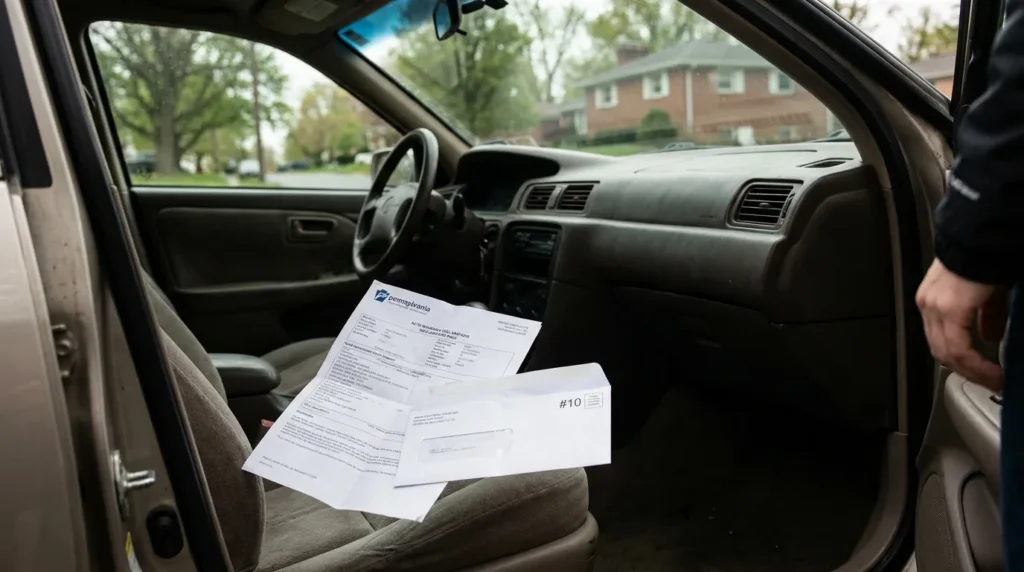
💡 Pro Tip: Ask your insurer for a complete copy of your declarations page and every signed § 1738 form. Insurers are generally expected to produce these records in coverage disputes, and a missing or undated form can change the value of a claim.
When a New Waiver Must Be Signed
Changes to your policy don’t always reset the waiver. Under 75 Pa.C.S. § 1738(c), a new waiver is generally required when there is a "purchase" of coverage, which Pennsylvania courts understand to include adding a vehicle or increasing limits. Changes that don’t alter coverage or costs for remaining vehicles may not trigger that requirement.
The Pennsylvania Supreme Court addressed this in 2023. In Franks v. State Farm, 42 MAP 2022 (Pa. Apr. 19, 2023), the Court held that removing a vehicle from a multi-vehicle policy where stacking had been waived did not require a new waiver, because removal alone is not a "purchase" under Section 1738(c).
The Knowing Waiver Requirement
Section 1738 demands a knowing, documented choice. Pennsylvania decisions have emphasized that insurers must obtain the insured’s written acknowledgment that he or she knowingly waived stacked UM/UIM coverage. Courts have been reluctant to allow policy exclusions to accomplish indirectly what the statute requires through a signed waiver.
Related doctrines remain unsettled. Household vehicle exclusion cases such as Gallagher v. GEICO, which declined to enforce that exclusion, and Erie Insurance Exchange v. Mione, which enforced an exclusion on different facts, show that outcomes are highly fact-dependent and subject to continued judicial refinement.
Should You Sign the Waiver? Practical Considerations
Signing lowers your premium, that’s the entire appeal. The statutory form tells you premiums will be reduced if you reject the coverage. The question is whether monthly savings justify the potential shortfall when an at-fault driver carries only minimum limits and your costs vastly exceed them.
Consider these factors before signing:
- Number of vehicles and licensed drivers in your household, including teen or college-age drivers
- Whether your health insurance and disability coverage would absorb a catastrophic injury
- Whether your UIM limits would realistically cover a permanent injury or wrongful death
- Whether anyone commutes long distances or rides a motorcycle or bicycle
- Whether you carry limited tort, which already restricts pain and suffering recovery
Many drivers discover their policy is thinner than assumed. A candid look at how your auto policy may be trash often reveals low UIM limits, an old stacking waiver, and limited tort capping recovery. An annual policy review is one of the least expensive forms of protection available.
💡 Pro Tip: If you already signed a waiver, you can generally ask your insurer to add stacked coverage going forward, subject to underwriting. Prospective changes won’t help with a crash that already happened, so timing matters.
What Injured Pennsylvanians Should Do After a Crash
Coverage analysis begins immediately, not months later. Preserving the police report, photographs, medical records, and every insurance declarations page may help establish both liability and the full universe of available coverage. Document treatment consistently from the first visit forward.
Insurers evaluate your paperwork long before you do. An adjuster may assert that stacking was waived, that a household exclusion applies, or that limited tort bars pain and suffering damages. Working with a uim stacking waiver pennsylvania lawyer allows those defenses to be tested against statutory text and case law rather than accepted at face value.
Deadlines Deserve Early Attention
Pennsylvania’s civil deadlines are unforgiving. Most personal injury claims face a two-year statute of limitations under 42 Pa.C.S. § 5524. While exceptions like the discovery rule or minority tolling may apply in limited circumstances, courts interpret them narrowly. UIM claims are contract-based and may carry their own notice, consent-to-settle, or suit requirements, all of which should be reviewed promptly.
Frequently Asked Questions
1. Does signing a UIM waiver affect my whole family?
Generally, yes. The statutory form states the first named insured rejects stacked limits for himself or herself and household members, so a spouse or resident child may be affected. Outcomes depend on policy language and specific facts.
2. Can a stacking waiver be invalid?
It can be. Under 75 Pa.C.S. § 1738(e), a rejection form must be signed by the first named insured and dated to be valid; non-compliant forms are void. Whether a particular form complies is a fact-specific question courts may evaluate.
3. If I remove a car from my policy, do I need a new waiver?
Not necessarily. In Franks v. State Farm, the Pennsylvania Supreme Court concluded that removing a vehicle, without changes to coverage or costs for remaining vehicles, was not a "purchase" requiring a new waiver under Section 1738(c). Adding a vehicle or increasing limits presents a different analysis.
4. Is stacked coverage automatic in Pennsylvania?
Stacked coverage is the statutory default where UM/UIM coverage exists on multiple vehicles. Under 75 Pa.C.S. § 1738(a), limits are generally summed across insured vehicles unless the named insured executes a valid waiver. Absent such a waiver, stacked coverage ordinarily applies, subject to applicable exclusions.
5. Should I talk to an attorney before signing UIM waiver paperwork?
It’s often worthwhile. Because the decision affects everyone in your household and cannot be undone retroactively, an informed discussion about pa auto insurance options before signing may prevent a serious coverage gap later.
Protecting Your Recovery Before and After a Collision
The stacking decision looks small on paper and enormous after a serious crash. Pennsylvania law sets stacked UM/UIM coverage as the default under 75 Pa.C.S. § 1738, requires a knowing and properly executed waiver to give it up, and voids forms that fail to meet statutory requirements. If you were injured by an underinsured driver, your claim’s strength may hinge on documents signed years ago, on how courts have interpreted household and regular use exclusions, and on how thoroughly your damages are documented.
If you or a family member was hurt by a driver whose insurance isn’t enough, let The Injury Pros review your coverage and options. Call 215-642-2335 or schedule your free consultation today.
Disclaimer: This content is for informational purposes only and is not legal advice. Every case is unique, and results may vary. Consult an attorney about your specific circumstances.