
Understanding Where Motorcyclists Stand in Pennsylvania’s Insurance Framework
Key Takeaways: Pennsylvania motorcyclists are generally excluded from first-party no-fault medical benefits that anchor the state’s auto insurance system, meaning riders cannot turn to their own policies for immediate medical payments after a crash. Under the Motor Vehicle Financial Responsibility Law (MVFRL), riders must carry mandatory liability insurance and stay mindful of lapse rules, especially seasonal riders who risk a three-month suspension. Injured riders typically pursue compensation through the at-fault driver’s liability coverage, where minimum limits of $15,000 per person are often inadequate for catastrophic injuries. Motorcyclists are generally treated as full tort, allowing injured riders to pursue non-economic damages without meeting the limited tort "serious injury" threshold, and a two-year statute of limitations under 42 Pa. Cons. Stat. § 5524(2) applies to filing suit. Working with a knowledgeable attorney helps prove negligence, navigate insurer tactics, and preserve claim value. Individualized legal review is essential to protecting your rights.
Pennsylvania motorcyclists are generally excluded from the first-party no-fault benefits that anchor the state’s auto insurance system. Pennsylvania runs a "choice" no-fault model for cars, but motorcycles occupy a different position under the Motor Vehicle Financial Responsibility Law (MVFRL). Riders must carry liability insurance yet generally cannot access the first-party medical benefits automobile drivers rely on after a crash. That distinction matters when you face medical bills and need to understand how you get compensated.
If you were injured while riding and need clear answers about your rights, the team at The Injury Pros is ready to help. Call us at 215-642-2335 or reach out through our confidential contact form to discuss your situation.
💡 Pro Tip: After a crash, request a certified copy of the police report and photograph your motorcycle, gear, and injuries before repairs or cleanup. This evidence often becomes central to proving another driver’s negligence later.
Why Motorcycles Sit Outside the No-Fault Medical Benefit System
The core reason motorcyclists are treated differently comes down to how Pennsylvania defines first-party benefit eligibility. Under the MVFRL, a person injured while occupying a motorcycle is generally not entitled to recover the first-party medical benefits that ordinary auto policies provide. Pennsylvania courts have described the MVFRL’s purpose as controlling escalating automobile insurance costs, a rationale you can trace through the Duquesne Law Review’s MVFRL analysis.
For automobile policies, first-party Medical Benefits coverage forms the backbone of the no-fault system. This coverage pays medical bills regardless of fault, with a statutory minimum of $5,000 for auto policies. Motorcycle policies generally are not required to include this first-party benefit, which is why an injured rider often cannot turn to their own policy for immediate medical payments the way a car driver can, though riders may purchase optional Medical Payments (MedPay) coverage as an add-on where available.
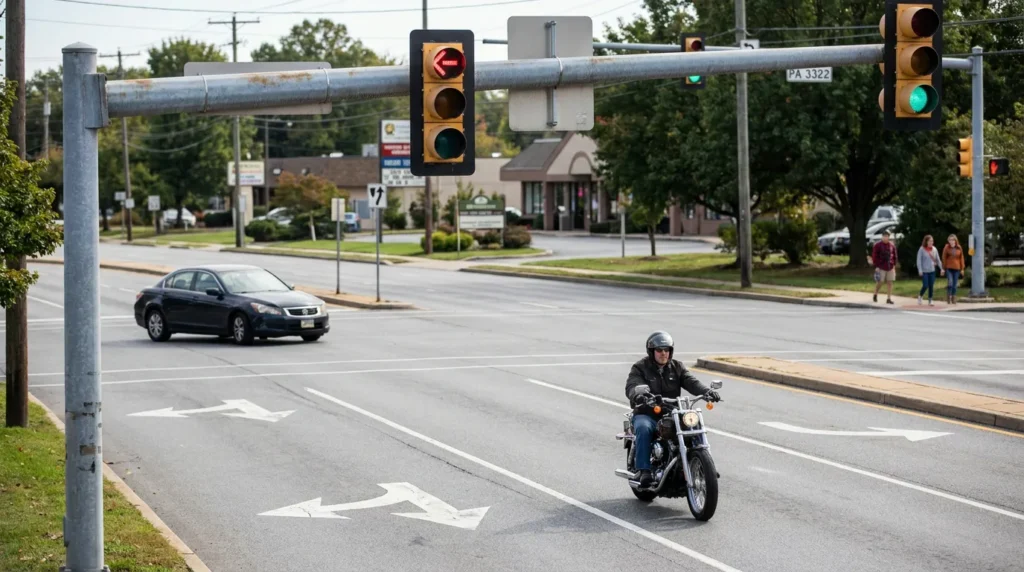
"No-fault" does not mean "no lawsuit." Even within the auto framework, an injured person may take a negligent driver to court under certain circumstances. Because motorcyclists typically fall outside the first-party benefit scheme, pursuing the at-fault driver is frequently the primary route to recovery for riders.
Riders Still Must Carry Insurance Under Pennsylvania Law
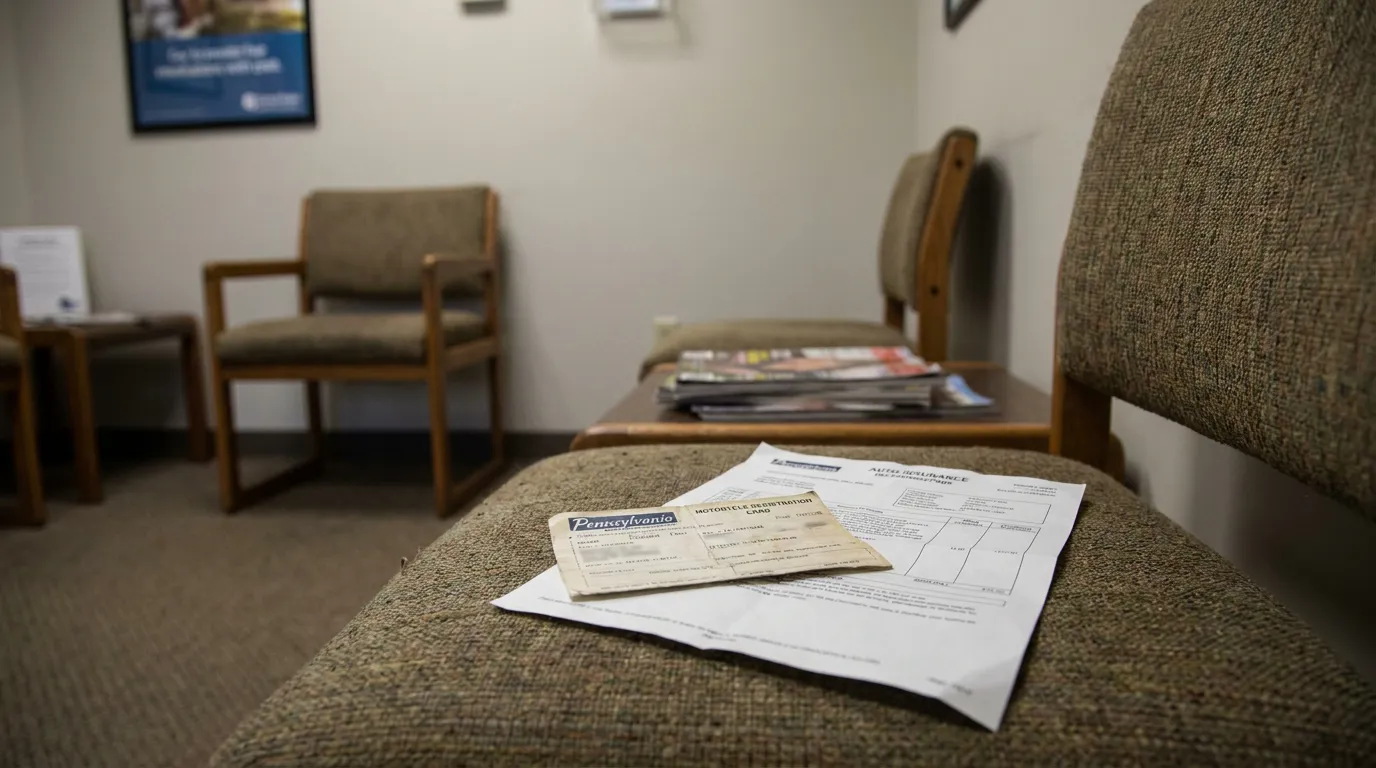
Being outside the first-party benefit system does not exempt motorcyclists from mandatory insurance. Pennsylvania law requires owners of all registered motor vehicles, including motorcycles, to maintain liability insurance. The Pennsylvania Insurance Department confirms that every registered vehicle must be insured, and that a lapse can lead to registration suspension, fines, and license consequences.
Seasonal riders should pay particular attention to how lapses are handled. Many motorcyclists drop coverage over winter, but that choice carries administrative risk. Under PennDOT’s financial responsibility rules, a lapse in insurance coverage generally results in a three-month registration suspension unless the lapse was less than 31 days and the owner proves the vehicle was not operated during that period.
💡 Pro Tip: If you store your bike seasonally, keep documentation showing non-operation, such as storage receipts or maintenance records. This can be the difference between a smooth reinstatement and a three-month registration suspension.
Here is a quick comparison of how the two vehicle types are generally treated:
| Feature | Standard Auto Policy | Motorcycle Policy |
|---|---|---|
| Mandatory liability insurance | Required | Required |
| First-party Medical Benefits (min. $5,000) | Included | Generally not required (optional MedPay may be available) |
| Access to "choice" limited/full tort election | Central to auto policy | Generally full tort; election typically unavailable |
| Registration lapse consequences | Suspension risk | Suspension risk |
This table simplifies a fact-dependent area of law, and your specific policy language can change the analysis.
How Compensation Works When You Cannot Rely on First-Party Benefits
When a motorcyclist is injured by a negligent driver, compensation usually flows through that driver’s liability coverage. Pennsylvania sets minimum bodily injury liability limits at $15,000 per person and $30,000 per accident. Those minimums are frequently inadequate for catastrophic motorcycle injuries such as traumatic brain injuries, spinal cord damage, amputations, or severe road rash, which is why identifying every available coverage source, including any uninsured or underinsured motorist coverage, is critical in a serious motorcycle injury claim in PA.
The tort framework also shapes what non-economic damages a claimant can pursue. Pennsylvania’s "choice" system lets automobile buyers select between limited tort and full tort coverage, explained in this overview of limited tort versus full tort in Pennsylvania. Motorcyclists are generally not subject to the limited tort election and are typically treated as full tort, meaning an injured rider can usually pursue non-economic damages such as pain and suffering without clearing the limited tort "serious injury" threshold. That threshold, death, serious impairment of body function, or permanent serious disfigurement (see Washington v. Baxter, 719 A.2d 733 (Pa. 1998)), generally restricts only automobile claimants who selected limited tort.
Compensation in a serious rider case may include several categories of loss. Depending on the facts, these can include:
- Past and future medical expenses related to the crash
- Lost wages and diminished earning capacity
- Pain and suffering and other non-economic harm
- Damages available to families through a wrongful-death action
Whether each category applies depends on your circumstances, available coverage, and the strength of liability evidence.
What a Motorcycle Accident Lawyer Near Me Can Do for Injured Riders
A motorcycle accident lawyer near me search often begins after a rider realizes their own policy will not cover medical bills. Because riders generally cannot rely on first-party benefits, proving the other driver’s negligence and causation becomes central. Investigation, witness statements, scene reconstruction, and medical documentation all help establish liability and quantify damages.
A knowledgeable PA motorcycle accident attorney can help you navigate insurer tactics. Adjusters may minimize a claim by leaning on stereotypes about riders or disputing injury severity. Working with a motorcycle accident lawyer near me can protect your communications and preserve claim value while you focus on recovery.
💡 Pro Tip: Avoid giving a recorded statement to the at-fault driver’s insurer before speaking with counsel. Early statements are often used later to dispute liability or downplay the severity of your injuries.
One point worth emphasizing is helmet law and its limits. In Pennsylvania, helmet use is not mandatory for riders 21 or older who have been licensed for two years or who completed an approved safety course, under 75 Pa.C.S.A. § 3525(d). While riding without a helmet is lawful in those circumstances, insurers may raise it during damages disputes, for example, to argue comparative negligence as to head injuries.
Deadlines That Can Make or Break a Rider’s Claim
The most unforgiving rule for injured motorcyclists is the filing deadline. Pennsylvania generally imposes a two-year statute of limitations for personal injury lawsuits arising from vehicle crashes, under 42 Pa. Cons. Stat. § 5524(2). This deadline applies to injured drivers, passengers, motorcyclists, bicyclists, and pedestrians alike.
Some exceptions may extend that period, but courts interpret them narrowly. Tolling and discovery-rule arguments do not apply automatically and depend heavily on specific facts. Do not assume any extension applies to your case without individualized legal review. Distinguish this civil deadline from separate administrative processes handled by PennDOT, which follow their own timelines and are not a substitute for filing suit.
💡 Pro Tip: Calendar your two-year deadline the day you are injured, then aim to consult counsel months in advance. Evidence fades, witnesses relocate, and early investigation strengthens claims.
Frequently Asked Questions
-
Are motorcyclists completely barred from no-fault benefits in PA?
Not universally, but the general rule is exclusion. Motorcyclists are typically excluded from the first-party medical benefits that anchor Pennsylvania’s auto no-fault system, although optional MedPay coverage is sometimes available as an add-on. Individualized review is important.
-
Do I still need insurance if I only ride in the summer?
Yes, as long as the motorcycle remains registered. Pennsylvania requires liability insurance on currently registered vehicles. A lapse generally triggers a three-month registration suspension unless it lasted under 31 days and you can prove the vehicle was not operated.
-
Can I sue the driver who hit me even though PA is a no-fault state?
In many cases, yes. Pennsylvania’s no-fault law allows an injured person to take a negligent driver to court under certain circumstances, and riders frequently pursue the at-fault driver’s liability coverage because first-party benefits are generally unavailable to them.
-
How long do I have to file a motorcycle accident lawsuit?
Generally two years from the crash. Under 42 Pa. Cons. Stat. § 5524(2), the standard deadline is two years, though limited exceptions may apply and are interpreted narrowly.
-
Does not wearing a helmet hurt my claim?
It depends on the circumstances. Helmets are not required for qualifying riders under 75 Pa.C.S.A. § 3525(d), but insurers may raise the issue when disputing damages, and the effect is fact-specific.
Protecting Your Rights After a Pennsylvania Motorcycle Crash
Motorcyclists in Pennsylvania generally stand outside the first-party no-fault benefit system, which makes proving fault and pursuing the responsible driver central to recovery. Riders must carry liability insurance, remain mindful of lapse and registration rules, and act within the two-year filing window. Because these issues are shaped by statutes like the MVFRL, 75 Pa.C.S.A. § 1714, and 42 Pa. Cons. Stat. § 5524(2), outcomes turn on the details of each case. Understanding where you fit in this framework is the first step toward protecting your claim.
If you or a loved one was hurt in a crash caused by another driver, you do not have to sort through these rules alone. Reach out to The Injury Pros today, call our team at 215-642-2335, or send us a message through our secure case review request to discuss your legal options.