

Understanding Federal Driving Time Limits After a Pennsylvania Truck Collision
Key Takeaways: Federal hours-of-service rules generally allow a property-carrying truck driver to drive up to 11 hours, but only within a 14-hour on-duty window that begins after 10 consecutive hours off duty. This 14-hour clock runs continuously and isn’t extended by breaks, naps, loading, or fueling, subject to limited exceptions like qualifying sleeper-berth pairings and adverse driving conditions, so a driver may violate the rules even with driving hours to spare. A 30-minute break requirement triggered by 8 cumulative hours of driving, plus 60/70-hour weekly caps, add further limits that can reveal chronic fatigue or carrier scheduling pressure. Proving a violation often depends on securing ELD data and duty status records quickly, then cross-checking them against fuel receipts, tolls, dispatch records, and payroll. Defendants commonly argue the violation was technical or that another factor caused the crash, so causation generally must still be established alongside the regulatory breach. Because retention periods are finite, acting early to preserve evidence can be critical in a Pennsylvania fatigued-trucker case.
The 11-hour and 14-hour limits are federal hours-of-service rules capping how long a commercial truck driver can legally drive and remain on duty. Under 49 CFR § 395.3(a)(3)(i), a driver may drive 11 hours during a 14-hour period, and that driving window generally opens only after 10 consecutive hours off duty. In a Pennsylvania truck crash case, these limits often become the measuring stick for whether a trucker was behind the wheel when federal law may have required rest. When a driver’s logs don’t add up, that discrepancy may support a negligence claim, though it’s rarely conclusive alone.
If a commercial truck has upended your life or taken a family member, you deserve answers about what those logs actually show. The team at The Injury Pros helps injured Pennsylvanians and grieving families investigate driver fatigue, preserve electronic records, and pursue accountability. Call 215-642-2335 or contact us now to discuss your situation.
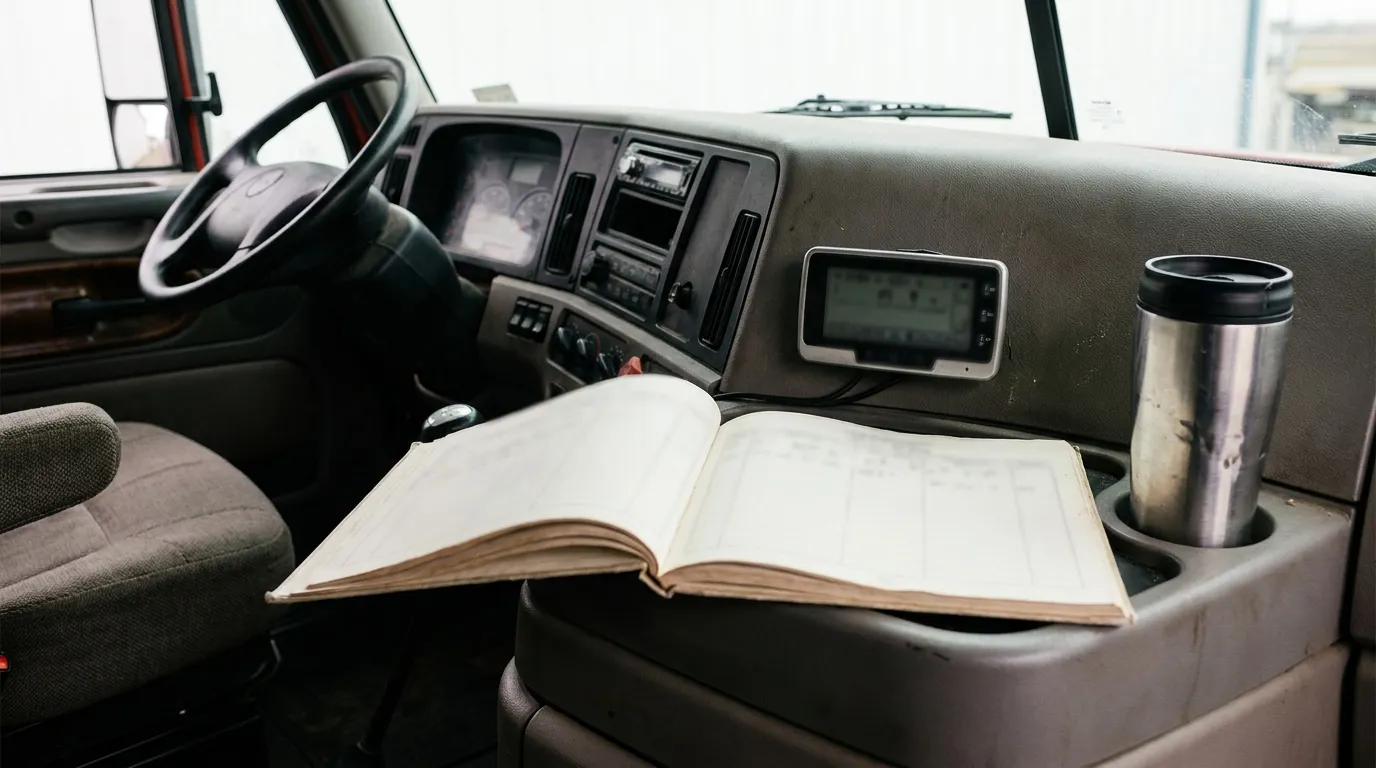
How the 11-Hour Rule Caps Daily Driving Time
The 11-hour rule is among the most straightforward federal truck driver driving limits. FMCSA regulations provide that a property-carrying commercial driver may drive a maximum of 11 hours after 10 consecutive hours off duty. Once that eleventh hour ends, driving must stop until the driver takes another full 10-hour off-duty break. A narrow adverse driving conditions provision in 49 CFR § 395.1(b)(1) can extend the maximum by up to two hours when unforeseen conditions arise.
This rule exists because fatigue can degrade reaction time, judgment, and lane control in ways that may resemble impairment. A fully loaded tractor-trailer on I-76, I-81, or I-95 typically needs substantially more stopping distance than a passenger car, so even a brief lapse in attention can be catastrophic.
In litigation, the 11-hour figure can give your legal team a concrete benchmark. If records show 12 or 13 hours of driving before impact, and no exception applies, that fact may support a claim that the carrier or driver breached a recognized safety standard. Whether a court treats that violation as negligence per se, evidence of negligence, or simply relevant background depends on the facts, the pleadings, and applicable Pennsylvania authority.
Why the 14-Hour Window Often Matters More
The 14-hour window limits the total on-duty period during which any driving may occur. Under 49 CFR § 395.3(a)(2), a driver may drive only during a 14-consecutive-hour period after coming on duty following 10 consecutive hours off duty, and may not drive after that period ends without another 10 hours off duty. Off-duty time does not extend the 14-hour period except as expressly permitted, principally qualifying sleeper-berth pairings under § 395.1(g) and the adverse driving conditions provision.
This distinction confuses many people, and trucking defendants sometimes exploit that confusion. A driver who spends four hours waiting at a warehouse dock in Allentown, then drives, then naps for two hours, generally cannot tack those hours onto the end of the day unless the rest qualifies under the sleeper-berth provision. The clock keeps running from the moment the driver comes on duty, regardless of breaks, loading, fueling, or paperwork within that window.
Because of this structure, a trucker may violate the 14-hour rule without ever exceeding 11 driving hours. A driver with only nine hours behind the wheel may still have been operating illegally if the fifteenth hour of the duty day had already begun. Investigating a fatigued trucker crash in PA therefore often requires reconstructing the entire duty day, not just the driving segments.
| Rule | What It Limits | Reset Requirement |
|---|---|---|
| 11-Hour Limit | Total driving time | 10 consecutive hours off duty |
| 14-Hour Limit | Window in which driving may occur | 10 consecutive hours off duty |
| 30-Minute Break | Driving after 8 cumulative hours of driving time | 30 consecutive minutes of non-driving status |
| 60/70-Hour Limit | Cumulative on-duty time over 7 or 8 days | 34 consecutive hours off duty (optional restart) |
💡 Pro Tip: Ask your attorney early whether the carrier operates on a 7-day or 8-day schedule, because that choice may determine which cumulative on-duty ceiling applies.
Proving an Hours of Service Violation Truck Crash in Pennsylvania
Proving an hours of service violation truck crash generally starts with securing the driver’s records of duty status before they disappear. Under 49 CFR § 395.8, drivers must maintain a record of duty status reflecting all on-duty and driving time, typically generated by electronic logging devices, subject to limited exemptions such as certain short-haul, driveaway-towaway, and older-engine operations. ELDs automatically record driving time, making them harder to falsify than old paper logbooks, though edits and annotations still occur and should be examined.
These federal standards generally apply across state lines, including in Pennsylvania. The hours of service regulations issued by FMCSA govern interstate commercial motor vehicle operations nationwide under 49 CFR Part 395. That uniformity generally means a carrier based in Ohio or New Jersey remains subject to the same duty-hour ceilings when its trucks travel through Pennsylvania.
Records Worth Requesting Early
- ELD data and supporting documents covering the days before the crash
- Dispatch instructions, trip assignments, and delivery deadlines
- Fuel receipts, toll records, and weigh station entries
- Bills of lading and loading or unloading timestamps
- Payroll records that may reveal compensated hours not reflected in the logs
Cross-Checking Logs Against Independent Data
Corroborating records can reveal discrepancies that the logs alone conceal. A fuel purchase in Harrisburg at 11:40 p.m. may be hard to reconcile with a log entry showing the driver off duty in Scranton at that hour. Cross-referencing independent timestamps is one of the more reliable ways to test whether duty status records were accurate.
Acting Before Retention Periods Expire
Retention obligations are finite, and evidence can be lost through routine deletion. Federal rules generally require carriers to retain records of duty status and supporting documents for six months, and some telematics and dispatch data is overwritten far sooner. Sending a preservation letter promptly may help prevent destruction of ELD data, telematics feeds, and dispatch communications. Courts may consider spoliation issues if relevant records vanish after a party had notice of a claim, though the outcome depends heavily on the circumstances.
The 30-Minute Break and Cumulative On-Duty Time Limits
Beyond the daily caps, FMCSA HOS rules include a 30-minute driving break requirement and 60/70-hour limits measured over 7 or 8 consecutive days. The break provision generally bars driving after 8 cumulative hours of driving time without at least 30 consecutive minutes in a non-driving status, and the 60-hour/7-day or 70-hour/8-day ceiling depends on whether the carrier operates every day of the week. These provisions can matter enormously in cases involving chronic fatigue rather than a single long shift. A driver who technically complied with the 11-hour rule on crash day may still have been dangerously worn down after a punishing week.
Weekly limits may also help expose pressure from the motor carrier itself. When dispatch schedules make lawful compliance nearly impossible, liability may extend beyond the driver to the company that built the schedule, whether through vicarious liability or direct claims such as negligent hiring, training, or supervision. Many readers find it useful to review additional Pennsylvania truck accident lawyer resources covering how carrier practices factor into liability.
Common Defenses and Practical Limits on HOS Evidence
Trucking defendants rarely concede that a logbook discrepancy caused the collision. Expect arguments that the violation was technical, that the driver was alert, or that another factor caused the crash. Establishing causation, not just a regulatory breach, is generally required to recover damages.
There are also legitimate exceptions within the regulations themselves. Short-haul provisions for drivers operating within a defined air-mile radius and returning to the work reporting location, adverse driving conditions allowances, and certain other exemptions can alter how the limits apply in a given case. A comprehensive overview of truck driver hour limits illustrates how varied these carve-outs can be, and whether one applies is a fact-specific question that should be confirmed against the current text of 49 CFR Part 395.
Pennsylvania’s comparative fault framework adds another layer. Under the state’s modified comparative negligence statute, a plaintiff’s recovery is reduced by their share of fault and barred entirely if their fault exceeds that of the defendants. Defense counsel may therefore argue the injured party contributed to the collision. Outcomes depend on the specific facts, the available evidence, and how a jury weighs competing accounts.
💡 Pro Tip: Photograph the truck’s identifying numbers and the carrier’s name if you can do so safely, since that information may help counsel identify the correct defendants quickly.
Building a Fatigue Case With Experienced Counsel
A fatigue claim is often strongest when the hours evidence is paired with human testimony and physical proof. Witness accounts of drifting or erratic driving, dashcam footage, and crash reconstruction may transform a log discrepancy into a coherent narrative. An attorney respected for handling commercial vehicle claims can coordinate these threads.
Multiple parties may share responsibility in a serious collision. The driver, the motor carrier, a broker, a cargo loader, or a maintenance contractor could each bear a portion of fault depending on the evidence. Working with a hours of service violation truck crash lawyer can help identify potentially responsible parties before the applicable statute of limitations runs.
Frequently Asked Questions
1. Does an HOS violation automatically prove the trucking company was negligent?
Not automatically. A violation may serve as meaningful evidence of negligence, but you generally must still connect the violation to the crash and to your injuries.
2. Do these federal rules apply to trucks that only drive within Pennsylvania?
The federal limits generally govern interstate commercial motor vehicle operations. Pennsylvania has adopted much of the federal framework for intrastate carriers, but state provisions can differ.
3. How long does the trucking company have to keep ELD records?
Federal regulations generally require retention of records of duty status and supporting documents for six months, and ELD data must be backed up for that period as well. Once routine retention lapses, recovering the data may become difficult or impossible, which is why prompt preservation demands matter.
4. Can a driver be within the 11-hour limit but still violate the law?
Potentially. Because the 14-hour window generally runs continuously from the start of the duty day and isn’t extended by ordinary off-duty breaks, a driver may exceed that window while still having driving hours available.
5. What if the driver falsified the paper or electronic logs?
Falsification of a record of duty status is prohibited by federal regulation, and independent records such as fuel receipts, GPS data, and toll records may help expose inconsistencies in the reported duty status.
Putting the Hours Evidence to Work for Your Family
Federal hours-of-service law can give Pennsylvania crash victims a concrete framework for testing whether a trucker was lawfully on the road. The 11-hour driving cap and 14-hour on-duty window, along with the 30-minute break and cumulative weekly limits, can create a documented trail that skilled counsel may follow. Because these standards generally apply nationwide to interstate operations, an hours of service violation truck crash claim in Pennsylvania may rest on the same regulatory foundation used across the country. Every case turns on its own facts, and no outcome can be predicted in advance.
If fatigue may have played a role in your collision, the window to preserve that evidence may be narrow. Reach out to The Injury Pros to have your case reviewed, call 215-642-2335, or schedule your free consultation today.
Disclaimer: This content is for informational purposes only and is not legal advice. Every case is unique, and results may vary. Consult an attorney about your specific circumstances.