
When a Turning Driver Crosses Your Path: Pennsylvania’s Left-Turn Rule Explained
Key Takeaways: Pennsylvania’s 75 Pa.C.S. § 3322 places the duty to yield on the driver turning left, requiring that driver to yield to any oncoming vehicle, including a motorcycle, close enough to constitute an immediate hazard. The rule applies to turns within an intersection or into an alley, private road, or driveway. Whether a rider was "so close as to constitute an immediate hazard" is generally a fact question decided through speed, sight lines, roadway geometry, and reconstruction evidence, often where insurers concentrate their defense. A violation may support negligence per se, but that doctrine addresses duty and breach only; causation and damages still require independent proof. Pennsylvania’s modified comparative negligence statute, 42 Pa.C.S. § 7102, reduces recovery in proportion to a plaintiff’s fault and bars recovery entirely if that fault exceeds 50%. Because motorcycle crashes may leave a thinner evidentiary trail, early preservation of footage, witness accounts, gear, and medical records can be critical. A two-year statute of limitations generally applies under 42 Pa.C.S. § 5524, with a separate six-month notice requirement when a Commonwealth or local government defendant is involved.
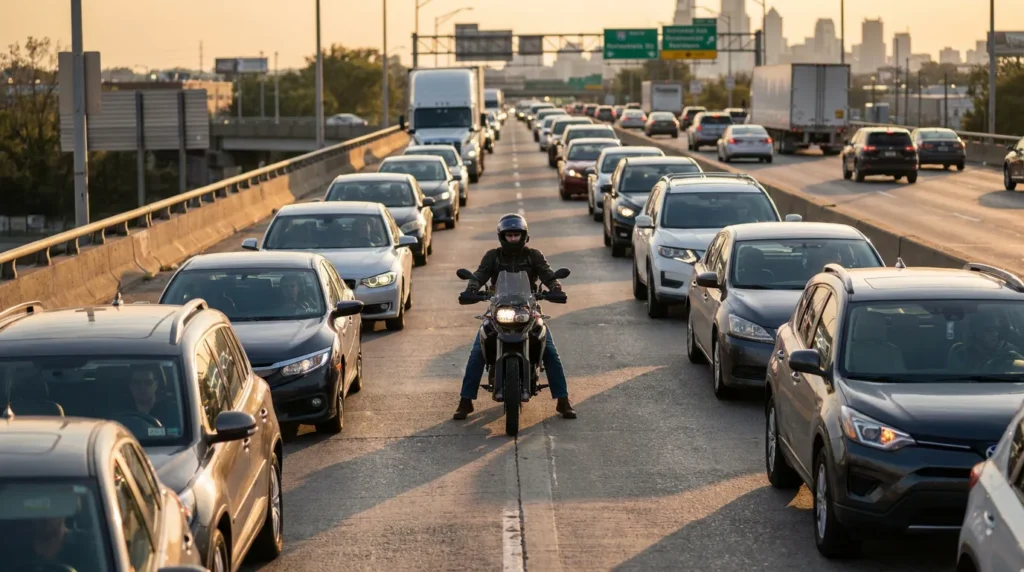
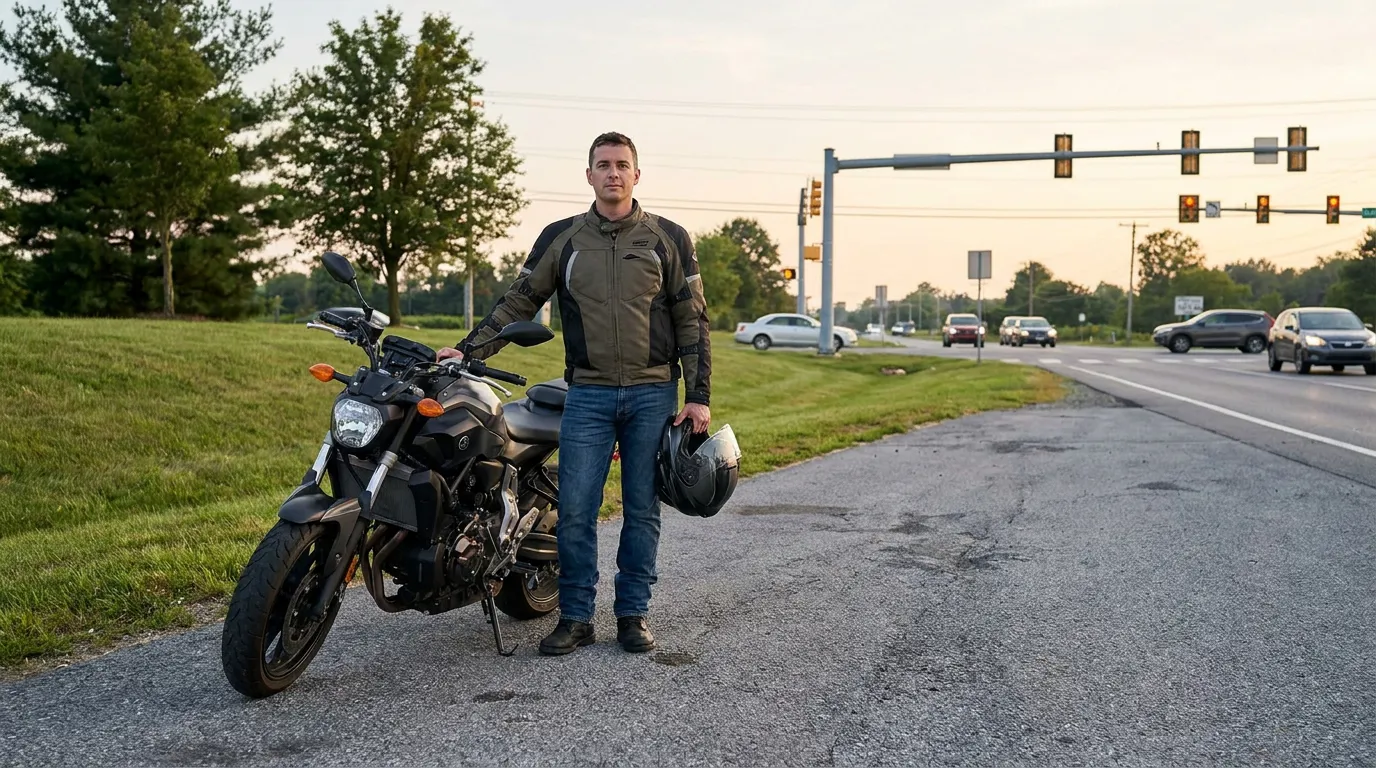
One of the most common ways a Pennsylvania rider gets hurt at an intersection is straightforward: a driver turning left cuts across the path of an oncoming motorcycle. Under 75 Pa.C.S. § 3322, "Vehicle turning left," a driver turning left within an intersection, or into an alley, private road, or driveway, must yield to any oncoming vehicle so close as to constitute a hazard. That sentence often becomes the backbone of left turn motorcycle accident liability Pennsylvania claims, since it places the initial duty to yield on the turning driver rather than the rider traveling straight through. It does not, however, relieve the approaching rider of the independent duty to operate with reasonable care.
If you or a family member were injured in an intersection crash, The Injury Pros can review how the statute applies to your specific facts. Call 215-642-2335 or contact us now to discuss your options before speaking further with an insurance adjuster.
What 75 Pa.C.S. § 3322 Actually Requires
Section 3322 imposes a conditional duty, not an absolute one. Found in Title 75, Chapter 33 (Right-of-Way), it requires a left-turning driver to yield to oncoming traffic close enough to constitute a hazard, covering turns within an intersection and turns into an alley, private road, or driveway.
The phrase "any vehicle approaching from the opposite direction" matters for riders. Since Title 75 defines "vehicle" to include motorcycles, the duty generally extends to an approaching rider, and a driver would struggle to argue it applies only to cars or trucks. The full text of the vehicle turning left statute is publicly available.
The "Immediate Hazard" Question Is Fact-Dependent
The statute sets no fixed distance or time. Whether an approaching motorcycle was "so close as to constitute a hazard" is generally a question for the finder of fact, evaluated using speed, sight lines, roadway geometry, lighting, and timing. Courts may weigh reconstruction testimony, physical evidence, and witness accounts, deciding the issue as a matter of law only where no reasonable dispute exists.
This is often where insurers focus their defense, arguing the motorcycle was speeding, not visible, or appeared suddenly. That argument is fact-sensitive and can often be tested against skid mark analysis, damage patterns, and event data.
How Section 3322 Interacts With the Rest of Chapter 33
Left-turn duties don’t exist in isolation. Chapter 33 groups Section 3322 with related provisions like 75 Pa.C.S. § 3321, governing right-of-way at uncontrolled intersections. Reading the Pennsylvania right-of-way chapter as a whole shows how the turning driver’s obligation fits within signal and turning-movement requirements under 75 Pa.C.S. §§ 3331 and 3334.
Lane positioning rules also provide background. Under 75 Pa.C.S. § 3301(a), vehicles must generally drive on the right half of the roadway, subject to exceptions for overtaking, obstructions, multi-lane roads, and one-way streets. Where a driver’s pre-turn positioning is disputed, these provisions may become relevant.
The Pennsylvania Bar Association publishes a public overview of traffic law basics for lay readers, useful for context, though controlling authority remains the statutory text and binding appellate decisions.
Negligence Per Se and Left Turn Motorcycle Accident Liability Pennsylvania Claims
A statutory violation can matter, but doesn’t end the analysis. Under Pennsylvania’s negligence per se doctrine, violating a safety statute may establish duty and breach where the statute protects a class of individuals, clearly applies to the defendant’s conduct, the injured person falls within the protected class, and the harm is of the type the statute intended to prevent. Motorcyclists traveling lawfully through an intersection generally fall within that class under a failure-to-yield statute like Section 3322.
Even where negligence per se applies, causation and damages still require proof. Pennsylvania courts have made clear negligence per se does not establish proximate cause, and a citation or guilty plea to a summary traffic offense is generally not admissible to prove civil liability. The rider must still show the violation caused the crash and document losses with medical records, wage evidence, and testimony about lifestyle impact.
A case comment in the Duquesne Law Review, Vol. 15, Iss. 3, Article 10, discusses Pennsylvania’s approach to right-of-way and fault allocation in turning-vehicle collisions, useful for doctrine but not controlling on any individual case.
💡 Pro Tip: Ask police whether a citation was issued to the other driver. It’s generally not admissible to prove civil liability, but can be a useful investigative starting point.
Comparative Negligence and Shared Fault
Pennsylvania follows a modified comparative negligence system. Under 42 Pa.C.S. § 7102, a rider’s conduct may be examined, and recovery is reduced proportionally to assigned fault. If the rider’s fault exceeds 50%, recovery is barred entirely, making defense arguments about speed or visibility consequential.
Helmet and gear arguments sometimes surface in negotiations, but are limited. 75 Pa.C.S. § 3525 governs motorcycle helmet and eye-protection equipment requirements but contains no civil admissibility provision. Unlike the bicycle helmet statute (75 Pa.C.S. § 3510(c)) and the seat belt statute (75 Pa.C.S. § 4581(e)), which expressly bar use of violations as evidence in civil actions, § 3525 is silent on civil cases. Helmet use is optional for riders 21+ meeting experience requirements. Adjusters may still raise gear informally, so careful record review is generally necessary.
| Issue in a Left-Turn Case | Typical Rider Position | Typical Insurer Position |
|---|---|---|
| Duty to yield | § 3322 placed it on the turning driver | Motorcycle created a sudden hazard |
| Speed | Within the posted limit | Excessive speed reduced turn time |
| Visibility | Headlight on, clear sight line | Rider was obscured or unseen |
| Injury severity | Documented trauma and treatment | Pre-existing conditions contributed |
Why Motorcycle Cases Demand Different Evidence
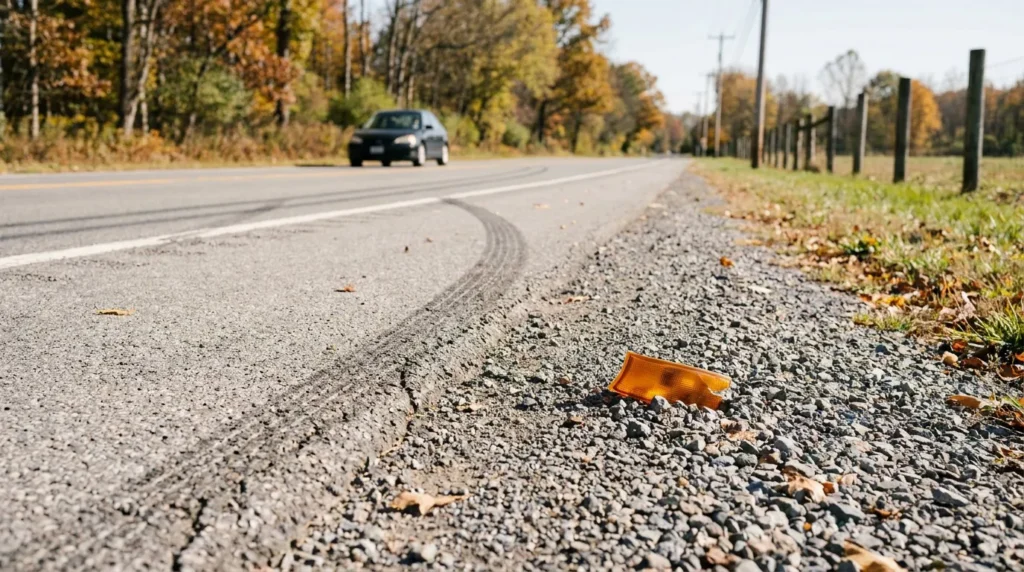
Motorcycle crashes may not leave the same evidentiary trail as car-versus-car collisions. There’s often no crumple zone, no airbag data, and sometimes no helmet camera. Investigators may rely on roadway scarring, debris fields, independent witnesses, and nearby camera footage that can be overwritten within days.
Rider visibility is a recognized safety concern statewide. PennDOT’s motorcycle safety guidance emphasizes driver awareness of motorcyclists at intersections, including left-turn conflicts. That recognition helps explain why this crash type is treated as a distinct risk category, though safety guidance itself is not a source of civil liability.
Evidence Worth Preserving Early
- Photographs of the intersection, sight lines, signals, and lane markings
- The full police crash report and any supplemental narratives
- Contact information for independent witnesses, not just the drivers
- Damaged helmet, jacket, boots, and the motorcycle itself, unrepaired
- Complete medical records from the first emergency visit forward
Understanding what happens if a left-turning driver hits a motorcycle in PA can help you avoid early missteps. Recorded statements given before you understand your injuries may later be used to argue your condition was minor. You generally have no obligation to give a recorded statement to the other driver’s insurer, though your own policy may impose cooperation duties, worth confirming with counsel.
Deadlines That Affect Left-Turn Motorcycle Claims
Pennsylvania generally applies a two-year statute of limitations to personal injury and wrongful death actions. Missing that deadline may bar a claim regardless of liability evidence strength. The period generally runs from the crash date for injury claims, from the date of death for wrongful death claims, and in limited situations from discovery of the injury and its cause. Minors’ limitations periods generally don’t begin until age 18.
Tolling and discovery-rule arguments are interpreted narrowly and are not automatic. Claims involving a government vehicle or defendant typically require written notice within six months under 42 Pa.C.S. § 5522, operating independently from the two-year deadline, and sovereign/governmental immunity statutes may also limit available damages.
💡 Pro Tip: Start a dated journal describing pain levels, missed work, and limited activities. Contemporaneous notes often carry more weight than recollections offered months later.
Frequently Asked Questions
1. Does Section 3322 make the turning driver automatically at fault?
No. Section 3322 establishes a duty to yield, and a violation may support a negligence claim, but fault still depends on causation, comparative negligence, and case-specific evidence.
2. What if I was traveling slightly over the speed limit?
Speeding doesn’t necessarily bar recovery. Under 42 Pa.C.S. § 7102, recovery is reduced by your fault percentage and barred only if it exceeds 50%. The practical effect depends on reconstruction evidence and whether speed actually contributed to the crash.
3. Do these rules apply to driveway and parking lot entrances?
Yes, Section 3322 expressly covers turns into an alley, private road, or driveway. Many crashes outside signalized intersections may fall within the statute, though Title 75 applies only in limited respects on purely private property like some parking lots.
4. How soon should I contact a Pennsylvania motorcycle attorney?
Earlier involvement generally helps preserve evidence, since surveillance footage, vehicle condition, and witness memory can degrade quickly. Speaking with a Pennsylvania motorcycle attorney soon after a crash may help secure critical proof.
5. Can a family member bring a claim after a fatal left-turn crash?
Yes. Pennsylvania recognizes wrongful death and survival actions. A wrongful death action is generally brought by the personal representative for a surviving spouse, children, or parents; a survival action is brought by the estate. Each has its own procedural requirements and deadlines.
Putting the Statute to Work for Injured Riders
Section 3322 may give Pennsylvania motorcyclists a meaningful legal foundation, since the duty to yield rests with the turning driver. That foundation still needs evidence: reconstruction of the approach, documentation of visibility, and thorough proof of injuries and losses. Insurers may test every element, often by suggesting the rider appeared too suddenly to avoid. Understanding how the right of way law Pennsylvania provides interacts with comparative negligence, causation standards, and filing deadlines can help separate a well-supported claim from one that stalls. Every case turns on its own facts, and no statute guarantees a particular result.
If a turning driver caused your crash, don’t let the evidence fade while you wait. Reach The Injury Pros team by calling 215-642-2335, or request a case review to have your intersection collision evaluated under Pennsylvania law.
Disclaimer: This content is for informational purposes only and is not legal advice. Every case is unique, and results may vary. Consult an attorney about your specific circumstances.