
Understanding Fault When You Are Hit From Behind in Bensalem
Key Takeaways: A Bucks County driver who rear-ends another vehicle on Street Road is usually presumed at fault because Pennsylvania law requires safe following distances under 75 Pa.C.S. § 3310, but this presumption is rebuttable and never automatic. Liability hinges on negligence, duty, breach, causation, and damages, and can shift if the lead vehicle stopped suddenly, reversed, had non-working brake lights, or made an unsafe lane change. Pennsylvania’s modified comparative negligence rule may reduce compensation when an injured driver shares fault, and bars recovery entirely if the injured driver is more than 50% at fault, so insurers often try to assign partial blame. State minimum coverage is frequently inadequate for serious injuries, making early analysis of liability, medical benefits, and underinsured or uninsured motorist coverage important. Limited-tort versus full-tort elections can also affect your right to recover for pain and suffering. Promptly preserving evidence and consulting a Bucks County auto accident lawyer can strengthen your claim and protect your right to fair compensation.
A Bucks County driver who rear-ends another vehicle on Street Road is often presumed at fault, but liability is never automatic. Pennsylvania law generally requires every motorist to follow at a safe distance and stay alert, so the trailing driver usually carries the burden of explaining what happened. Still, fault determination in PA depends on the specific facts of each crash, and exceptions can shift responsibility in ways that surprise injured people.
If you were hurt in a rear-end crash and want to understand your options, the team at The Injury Pros is ready to help. You can call us at 215-642-2335 for a free consultation or reach out through our online case review form to discuss what comes next.
Why Street Road Sees So Many Rear-End Collisions
Street Road carries heavy commuter and commercial traffic through Bensalem, which creates frequent stop-and-go conditions where rear-end crashes happen. Sudden braking, congested intersections, and distracted driving all raise the risk on this busy corridor. Rear-end collisions are among the most common crash types nationally, and federal data reflects how often they occur. According to NHTSA crash data (CRSS/GES), approximately 1.7 million rear-end crashes occur in the United States each year, with some historical estimates averaging around 1.8 million. The NHTSA 100-Car Naturalistic Driving Study was a small-scale behavioral research project and is not the source of national annual rear-end crash volume statistics.
Distraction remains one of the leading contributors to these events. Naturalistic driving research, including the NHTSA 100-Car Naturalistic Driving Study, classified crashes by pre-event maneuver, precipitating factor, event type, contributing factors, associative factors, and avoidance maneuver, while also recording parameters such as driver reaction time, vehicle speed, and time-to-collision, and identified driver inattention and distraction as key factors in rear-end and lane-change crashes. That research supports plaintiff-side arguments about negligence in PA.
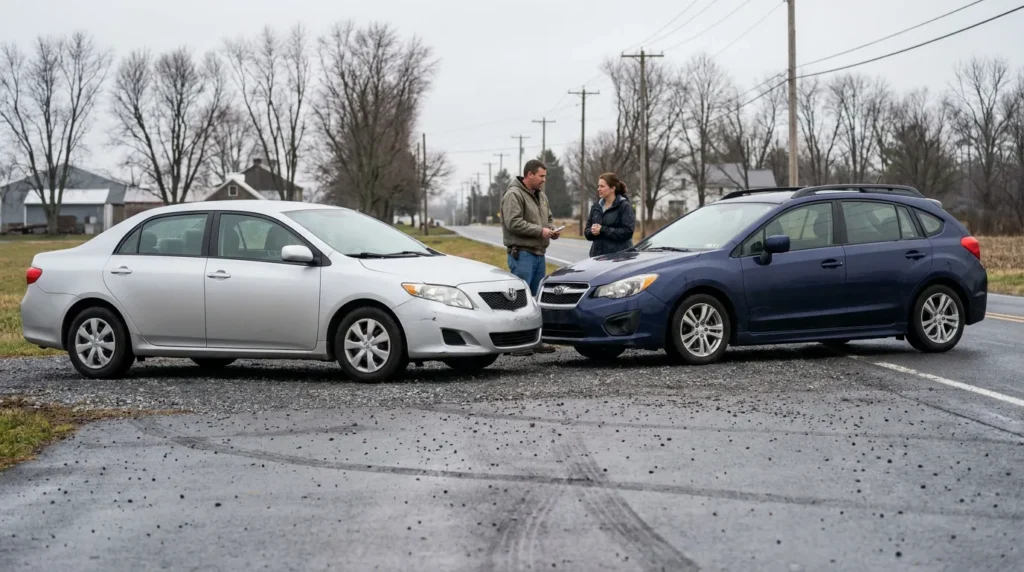
💡 Pro Tip: If it is safe to do so after a crash, take photos of skid marks, vehicle positions, and the surrounding intersection. These details can help reconstruct what happened long after the scene is cleared.
How Liability in Auto Accidents in PA Is Actually Decided
Liability in auto accidents in PA turns on negligence, which generally requires proving duty, breach, causation, and measurable damages. A rear driver who fails to keep a safe following distance may breach that duty. Pennsylvania’s following-too-closely rule appears in the state Vehicle Code, and you can review the full statutory framework through the official Pennsylvania Vehicle Code published by the General Assembly. Under 75 Pa.C.S. § 3310, drivers may not follow another vehicle more closely than is reasonable and prudent given speed, traffic, and road conditions.
That said, the rear driver’s apparent fault can be rebutted by evidence. Courts may consider whether the lead vehicle stopped suddenly without cause, reversed unexpectedly, had non-functioning brake lights, or made an unsafe lane change. In limited circumstances, a third vehicle or a sudden emergency can shift or share fault. Because these issues are fact-dependent, outcomes depend heavily on the evidence gathered after the collision.
Pennsylvania also uses a modified comparative negligence framework that affects recovery. If an injured driver is found 50% or less at fault, compensation is reduced in proportion to their share of fault; if they are found 51% or more at fault, recovery is barred altogether. This is one reason insurers often try to assign some blame to the injured party, even in a seemingly clear rear-end case.
💡 Pro Tip: Avoid giving a recorded statement to the other driver’s insurer before you understand your rights. Adjusters may use casual comments to support a fault-sharing argument.
Insurance Coverage That May Apply to Your Bensalem Crash Claim
Pennsylvania requires every registered vehicle to carry minimum liability coverage, which sets the baseline for what may be available after a crash. Understanding these limits helps injured people anticipate how much compensation an at-fault policy might provide. You can read the state’s official summary of Pennsylvania insurance requirements for full details. State law mandates the following minimums.
| Coverage Type | Pennsylvania Minimum |
|---|---|
| Bodily injury, one person | $15,000 |
| Bodily injury, more than one person | $30,000 |
| Property damage | $5,000 |
| Medical benefits | $5,000 |
These minimums are often inadequate for serious injuries, which is why coverage analysis matters early. Medical benefits coverage pays the medical bills for the policyholder and others covered under the policy, with a minimum limit of $5,000. Some insurers also offer a combined single limit of $35,000 for liability. When damages exceed available limits, injured parties may need to explore underinsured or uninsured motorist coverage.
Maintaining insurance is not optional in Pennsylvania. Failure to keep liability insurance on a registered vehicle may result in a three-month suspension of registration privileges, along with potential fines and other penalties. If an at-fault driver was uninsured, the path to injury compensation in PA may shift toward your own policy.
- Gather your own policy documents to confirm whether you carry medical benefits, full tort, or underinsured motorist coverage.
- Request the at-fault driver’s insurance information from the police report or exchanged details.
- Track every medical visit and expense so your damages are documented from day one.
Working With a Bucks County Auto Accident Lawyer After a Rear-End Crash
A Bucks County auto accident lawyer can help injured people preserve evidence, counter insurer defenses, and pursue fair compensation. Building a strong claim generally means documenting negligence, causation, and damages before memories fade and records disappear. A car accident attorney in Bucks County may also evaluate whether limited-tort or full-tort election affects your right to recover for pain and suffering, an issue unique to Pennsylvania drivers.
Choosing the right advocate is a decision worth making carefully. Before you start searching online, it helps to know what genuinely matters when you consult a lawyer about a serious injury. The right preparation can protect both your health and your legal position.
💡 Pro Tip: Seek a medical evaluation even if you feel fine. Some injuries, including concussions and soft-tissue damage, produce delayed symptoms that can weaken a claim if treatment is postponed.
Putting Rear-End Crash Risk in Context
Traffic crashes remain a serious safety concern, and understanding the broader data helps injured people appreciate the stakes. The National Highway Traffic Safety Administration projected that 39,345 people died in traffic crashes in 2024, a decrease of about 3.8% compared to the 40,901 fatalities reported in 2023. The 2024 fatality rate fell to 1.20 deaths per 100 million vehicle miles traveled, the lowest since 2019, yet still above the pre-COVID average of 1.13.
Crash severity varies widely by collision type. Angle collisions cause the greatest number of deaths among vehicle-to-vehicle crashes, with approximately 6,432 fatalities in 2020 (or roughly 8,400 in 2024), while rear-end crashes more often produce non-fatal but serious injuries. Collisions between motor vehicles account for the majority of crash injuries, representing about 77% of all motor vehicle injuries nationally. These figures underscore why even a low-speed rear-end crash on Street Road deserves careful attention. For more on how our team handles these matters, visit our car accident injury claims resource page.
Frequently Asked Questions
-
Is the rear driver always at fault in a Pennsylvania rear-end crash?
Not always, although the rear driver is frequently presumed at fault. Under 75 Pa.C.S. § 3310, following too closely can establish negligence, but that conclusion can be rebutted by evidence. Courts may consider sudden stops, brake-light failures, or unsafe lane changes that shift responsibility.
-
What is the deadline to file a rear-end crash claim in PA?
Pennsylvania generally applies a two-year statute of limitations for personal injury claims. Courts interpret exceptions such as the discovery rule narrowly, and tolling does not apply automatically. Because deadlines can vary by the facts, it is wise to confirm your timeline early rather than assume an extension applies.
-
What if the at-fault driver had no insurance?
You may still have options through your own coverage. Operating without insurance can lead to penalties, including a three-month registration suspension. If the other driver was uninsured, uninsured motorist coverage on your policy may provide a path to injury compensation in PA, subject to your policy terms.
-
Does limited tort affect my rear-end crash claim?
It can significantly affect your right to recover certain damages. Drivers who elected limited tort may face restrictions on claims for pain and suffering unless their injuries meet a serious-injury threshold or another statutory exception applies. Fact-specific analysis is often required, so this issue should be reviewed carefully.
-
What evidence helps prove negligence in PA?
Documentation gathered soon after the crash tends to carry the most weight. Police reports, photographs, medical records, and witness statements can all support fault determination in PA. The sooner this evidence is preserved, the stronger a negligence argument may become.
Protecting Your Rights After a Street Road Collision
A rear-end crash on Street Road may seem straightforward, but liability, insurance coverage, and Pennsylvania’s tort rules can complicate even a clear case. While the trailing driver is often presumed responsible, fault determination in PA depends on careful evidence and an understanding of the governing statutes. Acting promptly to document your injuries and preserve proof can make a meaningful difference in pursuing fair compensation.
If you were injured in a Bensalem crash claim and want guidance grounded in Pennsylvania law, The Injury Pros is here to listen. Call us today at 215-642-2335 or send us a message through our free consultation request to learn how we may be able to help you move forward.