
When Your Own Insurance Company Says No: Understanding a Common Pennsylvania Policy Trap
Key Takeaways: The regular use exclusion is insurer-drafted policy language that attempts to deny underinsured motorist benefits when someone is injured in a non-owned vehicle they drive regularly, such as a work truck, police cruiser, or a household car insured elsewhere. Pennsylvania’s Motor Vehicle Financial Responsibility Law controls how UIM coverage is offered, rejected, and stacked, requiring signed rejection and waiver forms. In 2024, the Pennsylvania Supreme Court ruled in Rush v. Erie Insurance Exchange, docket 77 MAP 2022, reversing the Pennsylvania Superior Court’s decision and holding that the regular use exclusion does NOT conflict with the MVFRL and is valid and enforceable. That ruling does not automatically resolve every claim, because outcomes still depend on exact policy wording, effective dates, and other independent defenses such as notice and consent-to-settle provisions. Practical steps matter: request the complete certified policy, report the crash promptly, avoid settling with the at-fault carrier before notifying your UIM insurer, and get any denial in writing. Because deadlines and policy versions vary, an experienced Pennsylvania UIM attorney can evaluate how current precedent applies to your specific claim.
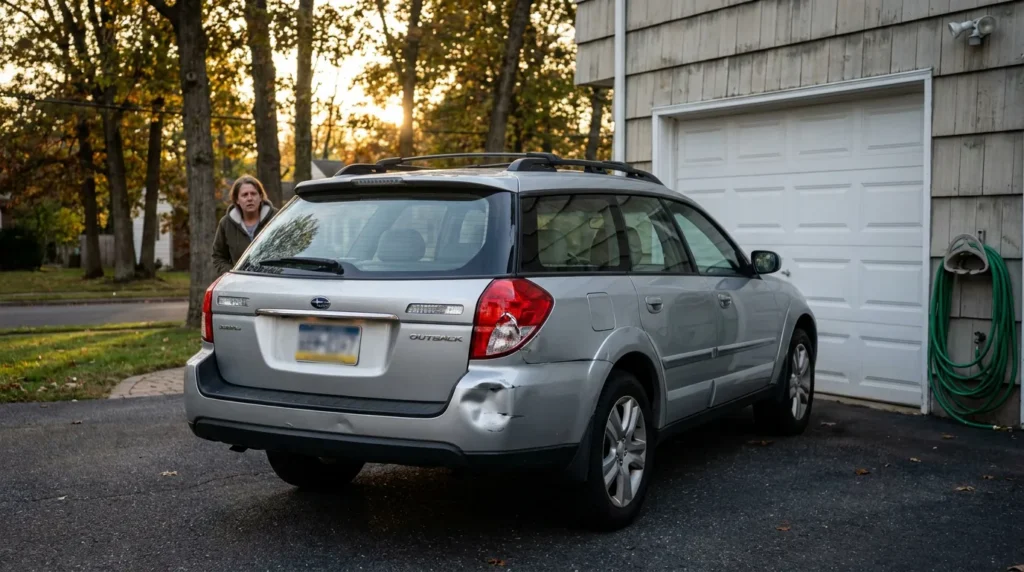
You paid for underinsured motorist coverage. You were hurt by a driver whose liability limits fell far short of your medical bills. Then your insurer denied the claim because you were driving a vehicle you use regularly that isn’t listed on that policy. That denial typically rests on the regular use exclusion, a provision that attempts to strip UIM benefits when the insured is injured in a non-owned vehicle available for frequent use. Whether it holds up depends heavily on the policy language and current Pennsylvania Supreme Court precedent.
If an insurer has pointed to this provision to reduce or deny your recovery, the team at The Injury Pros can review your policy and explain your options. Call 215-642-2335 or contact us now to discuss what happened.

What Underinsured Motorist Coverage Is Supposed to Do
UIM coverage generally fills the gap left by an at-fault driver who carries too little insurance, paying medical expenses and other damages when the at-fault driver is underinsured. In Pennsylvania, UIM coverage is defined at 75 Pa.C.S. § 1702 and governed by the Motor Vehicle Financial Responsibility Law (MVFRL), 75 Pa.C.S. §§ 1701, 1799.7.
The MVFRL doesn’t force every driver to buy UIM coverage, but it does control how coverage is offered and rejected. Under 75 Pa.C.S. § 1731, insurers must offer uninsured and underinsured motorist coverage with every policy, and an insured declining it must sign the statutorily prescribed rejection form. A rejection that doesn’t follow that form is generally void, treating the policy as if it provides the coverage. Section 1738 separately governs stacking and generally requires a signed written waiver before an insured gives up stacked limits.
State rules in this area differ significantly, which is why national summaries can mislead Pennsylvania readers. Pennsylvania’s statutory framework and appellate decisions, not generic national norms, generally control a Pennsylvania UIM claim.
How the Regular Use Exclusion Pennsylvania UIM Disputes Actually Work
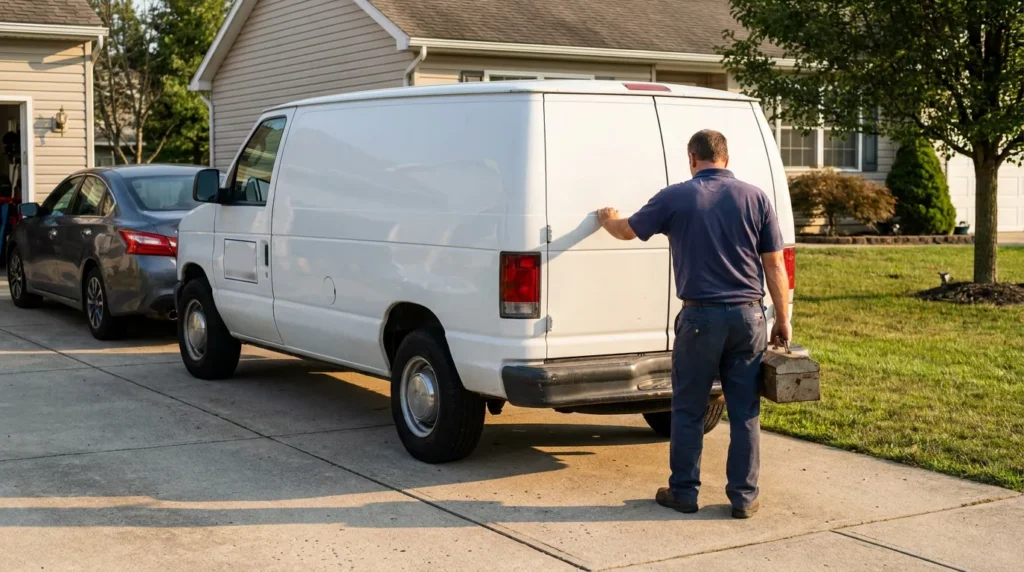
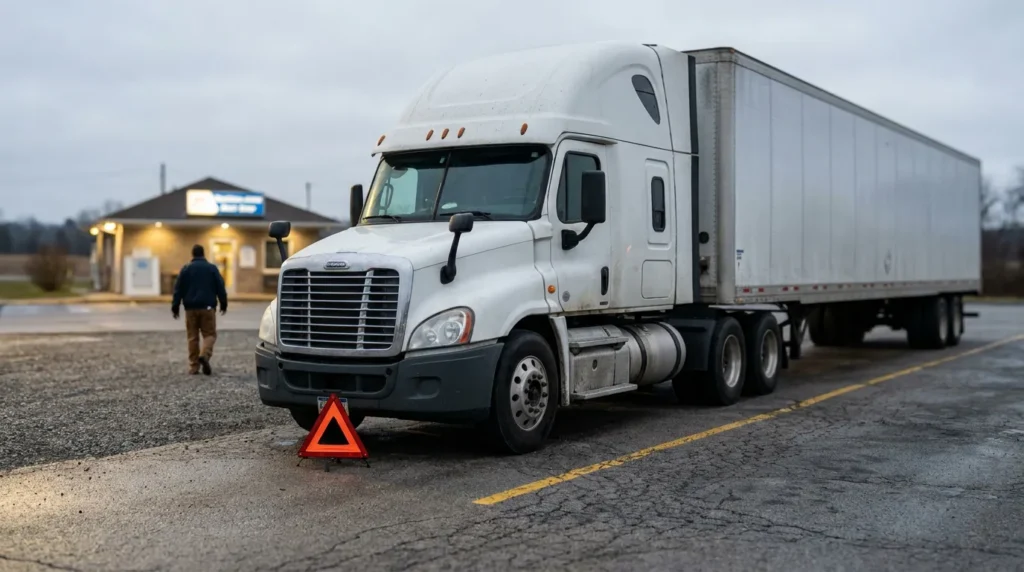
The regular use exclusion is policy language, not a statute. Insurers drafted it to avoid paying UIM benefits for injuries in a vehicle the insured drives routinely but never insured under that policy. Typical targets include employer-provided work vehicles, police and emergency vehicles, and a household car insured under a separate policy.
The insurer’s theory is premium-based: it argues the insured never paid premiums reflecting the risk of that regularly driven vehicle. Injured drivers respond that the MVFRL permits only limited, statutorily sanctioned reductions in UIM coverage, and an exclusion cannot quietly accomplish what the legislature required through a signed rejection or waiver.
Who Most Often Gets Caught by This Provision
- Police officers, firefighters, and paramedics injured in department vehicles
- Delivery drivers, tradespeople, and sales representatives in company cars
- Household members whose vehicles sit on separate policies
- Employees who drive a rotating pool vehicle as part of daily duties
The Doctrinal Tension Courts Keep Returning To
Pennsylvania courts have repeatedly examined whether these exclusions conflict with the MVFRL’s waiver scheme. In Gallagher v. GEICO Indemnity Co., 201 A.3d 131 (Pa. 2019), the Pennsylvania Supreme Court held a household vehicle exclusion unenforceable on the facts before it, because it operated as a de facto waiver of stacked coverage without the written waiver § 1738 demands. Later decisions have confined Gallagher to its context rather than invalidating household exclusions generally. Legal scholarship through Penn State Dickinson Law has traced how that reasoning reshaped analysis of auto policy exclusions in Pennsylvania.
Earlier appellate decisions addressed similar questions about UM and UIM exclusions, contributing to the framework courts still use: exclusions are read in the context of the whole policy, and genuinely ambiguous language is construed against the drafting insurer. That tilt matters, though it applies only when language is actually ambiguous, not as a guarantee of coverage.
The 2024 Pennsylvania Supreme Court Decision That Changed the Landscape
In 2024, the Pennsylvania Supreme Court addressed the regular use exclusion directly in Rush v. Erie Insurance Exchange, docketed at 77 MAP 2022. That ruling, available through the Justia record of the Pennsylvania Supreme Court UIM decision, reversed the Pennsylvania Superior Court’s decision, reaffirmed the reasoning of its earlier decisions in Burstein v. Prudential and Williams v. GEICO Government Employees Insurance Co., and held that the regular use exclusion does NOT conflict with § 1731 of the MVFRL and is valid and enforceable.
This is now the leading authority on the regular use exclusion in Pennsylvania, and it presents significant challenges for policyholders facing a UIM coverage denial based on this provision. Outcomes still depend on the exact exclusionary wording, the policy’s effective dates, procedural posture, whether the decision applies to claims predating it, and whether other independent defenses apply.
Insurers may still raise alternative grounds for denial: notice provisions, consent-to-settle and subrogation requirements, household member definitions, exhaustion of the tortfeasor’s limits, and limits calculations all remain live issues. A ruling on one exclusion doesn’t necessarily resolve an entire claim.
💡 Pro Tip: Request a certified copy of the complete policy, including all endorsements and declarations pages in effect on the crash date. Insurers sometimes quote exclusion language from a version that wasn’t actually in force.
| Issue | What the Insurer Typically Argues | What Injured Drivers Typically Argue |
|---|---|---|
| Regular use exclusion | No premium was paid for that vehicle | The MVFRL does not authorize this coverage reduction |
| Stacking | Limits are capped at one vehicle | No valid § 1738 written waiver exists |
| Policy ambiguity | Language is plain and enforceable | Ambiguity is construed against the drafter |
Steps That Often Strengthen a Pennsylvania UIM Claim
Preserving the right evidence early tends to matter more than arguing doctrine later. Report the crash promptly to both the at-fault carrier and your own UIM insurer, since delayed notice can create a separate defense if the insurer shows it was prejudiced. Keep treatment consistent and documented, since UIM adjusters often scrutinize gaps in care.
Don’t settle with the at-fault driver’s liability carrier before notifying your UIM insurer. Pennsylvania policies commonly contain consent-to-settle and subrogation provisions, and releasing the tortfeasor without permission can jeopardize the UIM claim. Written consent, obtained in advance, is generally the safer path.
Get the denial in writing. A written coverage position identifies exactly which provision the insurer relies on, making it easier to evaluate whether current Pennsylvania authority undermines that position. Verbal explanations from adjusters are hard to hold anyone to later.
Reading Your Own Declarations Page
Your declarations page generally shows which vehicles are covered and at what UIM limits. Compare that list against the vehicle you were driving when injured. If it’s absent, a regular use exclusion argument becomes more likely, and reviewing recent case developments on the firm’s Pennsylvania injury law blog can help you frame better questions.
Why Legal Guidance Matters in These Disputes
Coverage litigation is document-driven and deadline-sensitive. Pennsylvania’s general personal injury statute of limitations under 42 Pa.C.S. § 5524 is two years, while a UIM claim sounds in contract and is generally subject to the four-year period under 42 Pa.C.S. § 5525, with the accrual date depending on the facts and how courts analyze the particular policy. Courts often interpret tolling and discovery exceptions narrowly, so no extension should be assumed, and the underlying claim against the at-fault driver can expire well before the contract claim does.
Academic commentary has examined how these exclusions evolved and why courts scrutinize them. Analysis published in the Duquesne Law Review situates the regular use debate within broader MVFRL interpretation. An experienced regular use exclusion Pennsylvania UIM lawyer can apply that authority to the particular wording in your policy.
Every claim turns on its own facts. Two drivers with nearly identical crashes can receive different outcomes based on policy versions, employment arrangements, or household composition. Nothing here should be treated as a prediction about a specific case.
Frequently Asked Questions
1. Is the regular use exclusion still enforceable in Pennsylvania?
The Pennsylvania Supreme Court’s 2024 decision in Rush v. Erie Insurance Exchange, docket 77 MAP 2022, held that the exclusion does NOT conflict with the MVFRL and is valid and enforceable, reversing the Pennsylvania Superior Court’s earlier ruling. Application to any particular policy still depends on the specific language, effective dates, and facts of the claim.
2. Does this apply if I was hurt in an employer-owned work vehicle?
Work vehicles are among the most common settings for these disputes. Whether your personal policy’s UIM coverage responds depends on the exclusionary wording, any available employer coverage, priority-of-coverage rules, and your policy’s terms.
3. What is the difference between the regular use exclusion and the household vehicle exclusion?
The regular use provision generally targets non-owned vehicles you drive frequently. The household exclusion generally targets vehicles owned by you or a resident relative but insured elsewhere. Pennsylvania courts have analyzed both against the MVFRL’s rejection and waiver requirements, though the two exclusions are governed by separate lines of authority.
4. Can I still recover if the at-fault driver had minimum limits?
Potentially. UIM coverage is generally designed for that gap, subject to your policy limits, stacking status, exhaustion requirements, and the value of your damages.
5. How long do I have to act?
Deadlines vary by claim type and policy terms, and they are not automatically extended. Prompt review is generally advisable.
Protecting the Coverage You Already Paid For
A UIM denial based on a vehicle not listed on your declarations page is not the end of the analysis. Pennsylvania’s MVFRL, decades of appellate precedent, and the Supreme Court’s 2024 ruling all bear on how these disputes are resolved. The outcome in your situation will generally depend on your policy language, your documentation, and how quickly issues are raised.
The Injury Pros helps injured Pennsylvanians challenge questionable coverage positions. Reach the firm at 215-642-2335, visit the firm’s website, or schedule a consultation to have your policy reviewed.
Disclaimer: This content is for informational purposes only and is not legal advice. Every case is unique, and results may vary. Consult an attorney about your specific circumstances.