
Riding Between Cars in Pennsylvania: What the Law Allows
Key Takeaways: Lane splitting is not legal in Pennsylvania, because 75 Pa.C.S. § 3523(c) bans riding a motorcycle between lanes of traffic or between adjacent lines or rows of vehicles. The ban also covers lane filtering between stopped cars at red lights. The only exception applies to police officers performing official duties. The same statute protects riders too: it gives every motorcycle full use of a lane, allows up to two motorcycles side by side, and bars drivers from depriving them of that full use. A rider who was lane splitting during a crash may still be able to recover damages under Pennsylvania’s modified comparative negligence rule (42 Pa.C.S. § 7102(a)), generally as long as the rider’s fault is not greater than the combined fault of the defendants. Any award is generally reduced by the rider’s share of fault, and injury and property damage claims generally must be filed within two years.
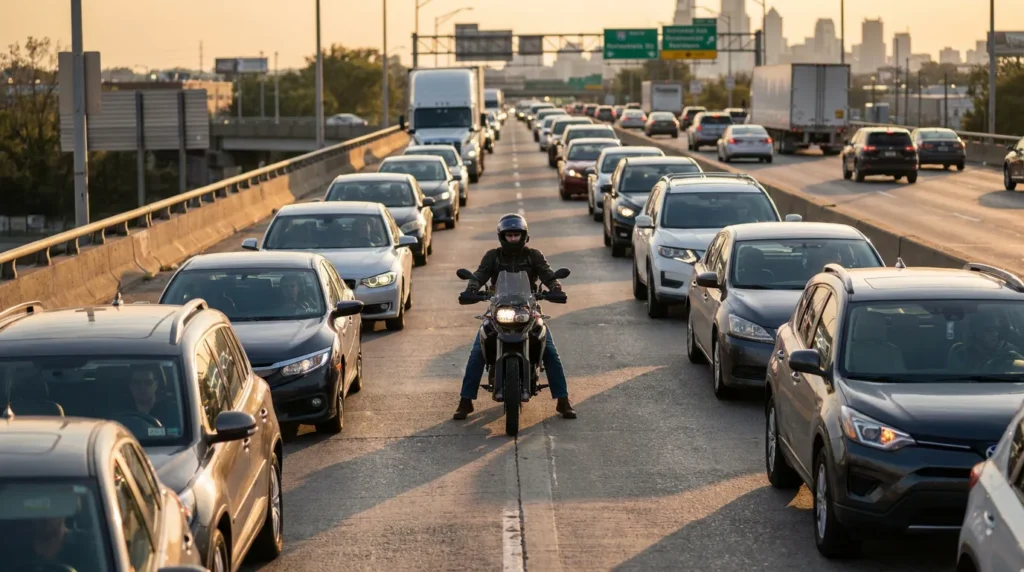
No, lane splitting is not legal in Pennsylvania. Under 75 Pa.C.S. § 3523(c), no person may operate a motorcycle between lanes of traffic or between adjacent lines or rows of vehicles. That means lane splitting, lane filtering, and riding between stopped cars at a red light are all prohibited. A rider who was lane splitting at the time of a crash may still have a path to compensation, though. Depending on the circumstances, Pennsylvania’s comparative negligence rules and the Vehicle Code’s protections for motorcyclists may still apply.
If a crash has upended your life, The Injury Pros can review what happened and explain your options. Call 215-642-2335 or contact us now to talk about your case.
Understanding Lane Splitting PA Rules Under the Vehicle Code
Pennsylvania’s main motorcycle operating rules sit in Title 75, Chapter 35 of the Pennsylvania Consolidated Statutes. That chapter covers "Special Vehicles and Pedestrians." Section 3523 is the provision most relevant to lane splitting questions. Riders and families can read the full text of 75 Pa.C.S. 3523 to see the exact wording.
The statute contains several separate rules that work together. Here is a quick overview:
| Subsection | What It Covers |
|---|---|
| § 3523(a) | Motorcycles are entitled to full use of a lane |
| § 3523(b) | No overtaking and passing in the same lane as the vehicle being passed |
| § 3523(c) | No riding between lanes or between rows of vehicles |
| § 3523(d) | No more than two motorcycles abreast in a single lane |
| § 3523(e) | Motorized pedalcycles barred from limited access highways |
| § 3523(f) | Subsections (b) and (c) do not apply to police officers on duty |
The Ban on Riding Between Lanes
Subsection (c) is the direct prohibition on riding between lanes in PA. It applies whether traffic is moving at highway speed or completely stopped. Some states now allow lane filtering at intersections, but the Pennsylvania Vehicle Code does not. A rider has to stay in the lane and wait with traffic.
No Passing Inside the Same Lane
Subsection (b) closes off a common alternative to lane splitting. A motorcycle operator may not overtake and pass in the same lane occupied by the vehicle being overtaken. A rider cannot squeeze past a car within that car’s lane, even if the car is near the edge of the lane.
Riding Side by Side in Group Rides
Pennsylvania allows two motorcycles to ride abreast in one lane, but no more than two. Section 3523(d) sets that limit. For group rides, pairs are fine, while three bikes across a single lane are not.
Exceptions and Related Pennsylvania Motorcycle Rules
The lane splitting ban has one narrow exception, and it covers police. Under 75 Pa.C.S. § 3523(f), subsections (b) and (c) do not apply to police officers performing their official duties. That exception does not extend to civilian riders, even experienced ones.
Section 3523 also touches on mopeds. Subsection (e) bars motorized pedalcycles from any limited access highway. Motorcyclists also generally have the same rights and duties as other drivers under Title 75, except where a provision cannot apply to motorcycles by its nature.
How Lane Splitting Laws by State Compare
Pennsylvania is one of many states that prohibit lane splitting. A small number of states have legalized lane splitting or limited lane filtering under set conditions. Riders who travel across state lines sometimes assume that a practice legal in another state is also allowed here. It is not. In Pennsylvania, § 3523(c) prohibits the practice.
Your Rights When a Driver Crowds You Out
The motorcycle lane law in Pennsylvania protects riders as well as restricting them. Section 3523(a) says a motorcycle is entitled to full use of a lane. No motor vehicle may be driven in a way that deprives a motorcycle of that full use. When a driver drifts into a rider’s space or forces the bike toward the shoulder, that driver may be violating the statute.
Violations like these can be evidence of negligence. In Pennsylvania, violating a safety statute can support a finding of negligence, but the violation must still be shown to have caused the harm. Many crashes happen because a driver failed to see the motorcycle, changed lanes without checking, or turned across the rider’s path. Riders hit in left-turning driver crashes often face similar questions about fault and visibility. Evidence that may help includes:
- Dashcam, helmet cam, or nearby surveillance footage
- Witness statements and contact information
- The police crash report
- Photos of vehicle positions, damage, and road conditions
- Medical records that tie your injuries to the crash
💡 Pro Tip: Insurance adjusters may ask early for a recorded statement. You can generally decline until you understand your rights, because offhand comments about your lane position may later be used to argue you were at fault.
Can You Still Recover If You Were Lane Splitting?
You may still be able to recover damages even if you were lane splitting when the crash happened. Pennsylvania follows a modified comparative negligence rule under 42 Pa.C.S. § 7102(a). Under that rule, a plaintiff’s own negligence does not bar recovery as long as it was not greater than the combined causal negligence of the defendant or defendants. Any award is reduced in proportion to the plaintiff’s share of fault.
How Fault Percentages Affect Your Award
Here is how that can work in practice. Suppose a jury decides a rider was 30% at fault for lane splitting and the driver was 70% at fault for an unsafe lane change. The rider could recover 70% of the total damages. A rider found exactly 50% at fault can still recover 50%. If the rider is found more at fault than the defendants combined, the rider recovers nothing. These percentages depend heavily on the facts.
Insurers often lean on the lane splitting ban to push fault onto the rider. A statutory violation can be evidence of negligence, but it does not automatically mean the rider caused the crash. If a driver would have hit the motorcycle regardless of its lane position, the rider’s violation may carry less weight. An experienced PA motorcycle accident lawyer can help challenge unfair fault allocations and document your losses, including medical bills, lost wages, and pain and suffering. Recovery of some damages, such as pain and suffering, may depend on the tort option selected on your auto insurance policy.
Deadlines That Can Affect Your Claim
Injured motorcyclists generally have two years to file a lawsuit in Pennsylvania. Under 42 Pa.C.S. § 5524(2), actions for injuries to the person or for death caused by another’s negligence generally must be commenced within two years. Section 5524(7) generally applies the same limit to claims for injury to personal property, such as damage to your motorcycle. You can review the Pennsylvania judicial code deadlines in the official statutes.
Exceptions to these deadlines exist, but courts interpret them narrowly. Tolling doctrines may apply in limited circumstances, such as when the injured person is a minor. Claims against government entities generally require written notice within six months of the incident under 42 Pa.C.S. § 5522. Because missing a deadline can end a claim, it is usually wise to act early.
💡 Pro Tip: Keep a simple journal of your symptoms, appointments, and missed workdays from the first week after the crash. These notes can help show non-economic damages that medical bills alone may not capture.
Frequently Asked Questions
1. Is lane splitting legal in Pennsylvania?
No. 75 Pa.C.S. § 3523(c) prohibits operating a motorcycle between lanes of traffic or between adjacent lines or rows of vehicles. The only exception, in § 3523(f), applies to police officers performing official duties.
2. Is lane filtering at red lights allowed in PA?
No. The ban covers riding between rows of vehicles, which includes filtering between stopped cars at intersections.
3. Can two motorcycles ride side by side in one lane?
Yes. Under 75 Pa.C.S. § 3523(d), up to two motorcycles may ride abreast in a single lane. More than two is not allowed.
4. What if a driver hit me while I was lane splitting?
Depending on the circumstances, you may still have a claim under 42 Pa.C.S. § 7102(a). Your recovery would be reduced by your share of fault. It would be barred only if your fault is greater than the combined fault of the defendants.
5. How long do I have to file a motorcycle accident lawsuit?
Generally two years under 42 Pa.C.S. § 5524 for personal injury, wrongful death, and property damage claims. Claims against government entities also generally require written notice within six months.
Protecting Your Rights as a Pennsylvania Rider
Lane splitting is illegal in Pennsylvania, but that rule is only part of the picture. Section 3523 also gives motorcycles the right to full use of a lane, and drivers who deprive riders of that right may be held accountable. Even when a rider was lane splitting, Pennsylvania’s comparative negligence law may still allow a reduced recovery, depending on the facts. Keep the two-year filing deadline in mind and preserve evidence early.
If you were injured or lost a loved one in a motorcycle crash, The Injury Pros can help you understand your next steps. Call 215-642-2335 or schedule your free consultation to start protecting your claim.
Disclaimer: This content is for informational purposes only and is not legal advice. Every case is unique, and results may vary. Consult an attorney about your specific circumstances.